


What if most of your content is just noise—and people forget it five seconds after they see it?
Engaging content gets people to stop, actually read, and take the next step.
This post cuts to what works: six simple principles—relevance, clarity, storytelling, interactivity, visual strength, and honest headlines—and shows when to use each.
You’ll also learn how to match format and timing to your audience so posts get read, shared, and acted on.
Core Principles of Creating Engaging Content That Captures Audience Attention

Engaging content is what gets people to stop scrolling, actually read, and do something about it. Not just skim and forget.
Creating content that works starts with one question: “Why should they care?” When you build everything around that, your headlines, images, and paragraphs all have to answer to the reader. Good content doesn’t just inform. It shows what people gain, what they’ll miss if they don’t pay attention, and how things get better after they engage. Understanding your audience reveals these motivations, whether they fit into eight universal user needs (Keep me on trend, Update me, Educate me, Give me perspective, Divert me, Inspire me, Help me, Connect me) or something more specific to your niche. Strong headlines and storytelling turn boring facts into something people remember.
Six drivers separate content that works from content that gets ignored:
Relevance is about addressing a real problem, question, or goal your audience already has.
Clarity means readers understand what they’re getting within seconds. No confusion.
Storytelling uses real examples and scenarios to make abstract ideas concrete.
Interactivity includes questions, polls, comment prompts, and clear next steps instead of passive reading.
Visual strength comes from images, video, and layout choices that help people understand and remember.
Honest headlines deliver exactly what they promise, which builds trust and keeps people from clicking away.
Audience data like time on page, scroll depth, comments, and shares show which principles are working and where you need to adjust. Relying too much on “update me” content (basic news or announcements) usually gets lower engagement, so mix in inspirational angles, practical help, or perspective pieces. Watch which topics and formats get the most interaction, then do more of what your specific audience values.
Audience Needs and Research for Highly Engaging Content

Understanding what makes your audience engage starts with mapping their motivations. In March 2023, a widely used user needs model expanded from six to eight core needs, recognizing that people want different things when they consume content. “Update me” content (simple news and announcements) often fills up publishing calendars, but it consistently underperforms. Readers scroll past updates unless those updates connect to a benefit, missed opportunity, or something personally relevant.
Good audience research uncovers the emotional triggers and practical goals behind each click. Look at past posts that got high engagement, survey your community, and analyze comment themes to spot recurring questions, frustrations, and goals. Build personas that go deeper than demographics. Capture daily routines, decision moments, and the language people use when describing their challenges. When you know whether your audience wants quick wins, deeper expertise, or just a mental break, you can match tone, depth, and format accordingly.
Mapping Content to the 8 Universal Needs
Each of the eight universal needs corresponds to a different engagement pattern. “Keep me on trend” content (style guides, emerging tools, industry shifts) works best when it signals what’s next and why it matters now, giving readers a competitive or social edge. “Update me” pieces deliver facts efficiently but engage more when you frame them around implications or next steps rather than just the event. “Educate me” content builds trust through tutorials and explainers that solve real problems with actionable steps. “Give me perspective” posts interpret complex events or offer a fresh angle that helps readers make sense of confusion. “Divert me” material (humor, entertainment, lighthearted storytelling) provides a mental reset and often gets the highest share rates when it feels authentic. “Inspire me” content shows transformation, success stories, or aspirational outcomes that make readers imagine their own progress. “Help me” pieces respond to urgent needs with checklists, troubleshooting advice, or tools readers can use right away. “Connect me” formats (community highlights, user content, collaborative projects) strengthen belonging by putting the audience at the center. Blending multiple needs in one piece often produces the strongest engagement, like a how-to guide (“Educate me”) illustrated with real customer wins (“Inspire me”) and a prompt to share results (“Connect me”).
Crafting Engaging Content Through Headlines, Hooks, and Openings

Headlines carry the weight of the first impression. They determine whether someone clicks, scrolls, or shares. A compelling headline clearly signals the outcome or benefit waiting inside, avoiding vague promises or misleading hooks. Clarity beats cleverness. Readers decide in under three seconds whether content is worth their attention, so headlines must answer “What will I learn?” or “What will change for me?” in plain language.
SEO and audience appeal work together when you place high-intent keywords near the front of the headline while keeping phrasing natural and specific. Keyword research reveals the exact phrases your audience types into search bars, and weaving those terms into headlines improves discoverability without sacrificing readability. Question headlines perform well when they hint at where the answer leads. “How Can You Double Email Engagement?” works better than “What Is Email Engagement?” because the first version implies a tactical payoff. Outcome-based headlines like “7 Ways to Cut Content Production Time in Half” or “Why Your Landing Pages Aren’t Converting (and How to Fix It)” set clear expectations and attract motivated readers. Testing different headline variations on social posts, email subject lines, or blog titles shows which formulas resonate most with your specific audience.
Five headline formulas consistently increase engagement:
The numbered list: “5 Mistakes Killing Your Engagement (and How to Avoid Them)”
The question with direction: “Struggling to Grow Your Audience? Try These 3 Tactics”
The how-to promise: “How to Write Headlines That Drive Clicks Without Clickbait”
The before and after contrast: “From 200 to 2,000 Subscribers: What Changed”
The urgent insider tip: “The One Content Metric Most Creators Ignore”
Your opening sentences must deliver on the headline’s promise immediately. Start with the most important information, a surprising fact, or a relatable scenario that validates why the reader clicked. Long introductions that meander or repeat the headline waste attention. Get to the value in the first two sentences and keep momentum building from there.
Timing, Format Fit, and Content Pacing for Stronger Engagement

When you publish and how you structure content directly influence whether someone engages or scrolls past. Audience rhythms (daily routines, energy levels, decision windows) shape receptivity. Mornings often demand short content that delivers quick wins or essential updates, while evenings and weekends open space for deeper exploration, longreads, or video. A working parent scanning their phone at 7 a.m. won’t watch a seven-minute tutorial, but they might save a 60-second Reel with a clear headline or click a scannable checklist they can skim in under two minutes.
Format fit matters as much as timing. Matching content depth and effort to the moment increases completion rates and satisfaction. A 2,000-word guide performs well when someone is actively problem-solving at a desk, but the same information reformatted as a carousel post or infographic works better during a commute or lunch break. Short-form video (Reels, Shorts, TikToks) capitalizes on micro-moments of attention and can generate up to 67% more engagement than standard video posts. Longreads and detailed video content require high-attention moments when the audience has chosen to focus, so publishing them when your analytics show peak “dwell time” or weekend traffic improves performance.
Pacing within each piece of content also drives engagement. Scannable layouts with short paragraphs, subheadings, bullet points, and visual breaks let readers move through material at their own speed. Dense blocks of text increase bounce rates, especially on mobile where more than two or three sentences per paragraph feels overwhelming. Varying sentence length and using white space strategically help maintain momentum.
| Format | Ideal Timing | Engagement Goal |
|---|---|---|
| Short-form video (Reels, Shorts) | Morning commute, lunch breaks, evening scroll sessions | Quick views, shares, saves for later |
| Longreads and how-to guides | Evenings, weekends, focused work blocks | Deep learning, bookmarks, return visits |
| Email newsletters | Weekday mornings (Tuesday–Thursday optimal for most industries) | Opens, clicks, forwards to colleagues |
| Interactive posts (polls, quizzes) | Midday and early evening when audience is active on platform | Votes, comments, profile visits |
Using Audience Input and Interactivity to Increase Engagement

Ninety-five percent of content engagement happens on social media, making audience participation a critical lever for reach and loyalty. When you design content with clear, visible calls to action (vote in this poll, share your experience in the comments, tag someone who needs this, submit a photo using our hashtag), you turn passive viewers into active contributors. Interactivity signals to platform algorithms that your content is worth surfacing to more people, creating a compounding effect.
Responding to comments and questions after you publish sustains engagement long past the initial post. When readers see that you’re present and genuinely interested in their input, they’re more likely to participate in future discussions and recommend your content to others. Monitoring conversations across platforms, especially in the first few hours after posting, helps you clarify points, answer objections, and amplify great audience contributions by highlighting them in follow-up content or stories. Comments moderation isn’t just about removing spam. It’s about building a community where people feel heard and valued.
User-generated content boosts engagement and provides authentic social proof that polished brand content can’t replicate. Encourage your audience to share their own stories, results, or creative interpretations of your product or message, then feature the best submissions. A contest or challenge that invites participation (tag a friend, share your before and after, post a photo with a branded hashtag) can generate hundreds of contributions and significantly expand your reach. Portland Cider Co. saw about 3,000 fan-generated posts per month and gained 250 new recurring memberships after launching an omnichannel campaign that centered audience recipes, short videos, and a giveaway. The key to successful interactive content is making the ask explicit, the barrier to entry low, and the reward (whether it’s recognition, a prize, or simply being part of something) clear and appealing.
Visual Storytelling and Multimedia for More Engaging Content

Visuals amplify engagement because people remember visual information 65% longer than text alone. Adding an image, video, infographic, or chart to written content increases comprehension, shareability, and time on page. Authenticity matters more than polish. A Marketing Experiments test found that an actual product photo generated 35% higher signups than a top-performing stock image, and 62% of consumers say high-quality product images are crucial to purchase decisions. Original photography, even shot on a high-spec smartphone with simple props, builds trust and differentiation that generic stock images can’t deliver.
Short-form video consistently outperforms other formats in engagement metrics. Reels can produce up to 67% more engagement than standard video posts, and TikTok has surpassed one billion monthly active users, signaling where audience attention is concentrated. Effective video storytelling requires tight editing, a strong hook in the first three to five seconds, and captions or text overlays for viewers watching without sound. Filming in vertical 9:16 aspect ratio for Reels, Shorts, and Stories matches native platform formats and maximizes screen real estate on mobile devices. Thumbnails and opening frames determine whether someone stops scrolling, so choose compelling, high-contrast visuals that clearly signal the content’s value.
Practical multimedia tips to increase engagement:
Use original photos that show real outcomes. Lifestyle shots of your product in use, behind-the-scenes moments, or customer results outperform staged stock imagery.
Add captions and alt text to all visuals. Accessibility improvements also boost SEO and help platform algorithms understand your content.
Repurpose high-performing written content into infographics or quote graphics. Tools like Canva and Piktochart make design approachable, and visual summaries earn more shares than text-only posts.
Keep video editing tight and varied. Pacing, visual cuts, and on-screen text maintain attention and make it easier to repurpose clips for different platforms or formats.
Content Distribution, Repurposing, and Channel Optimization for Engagement
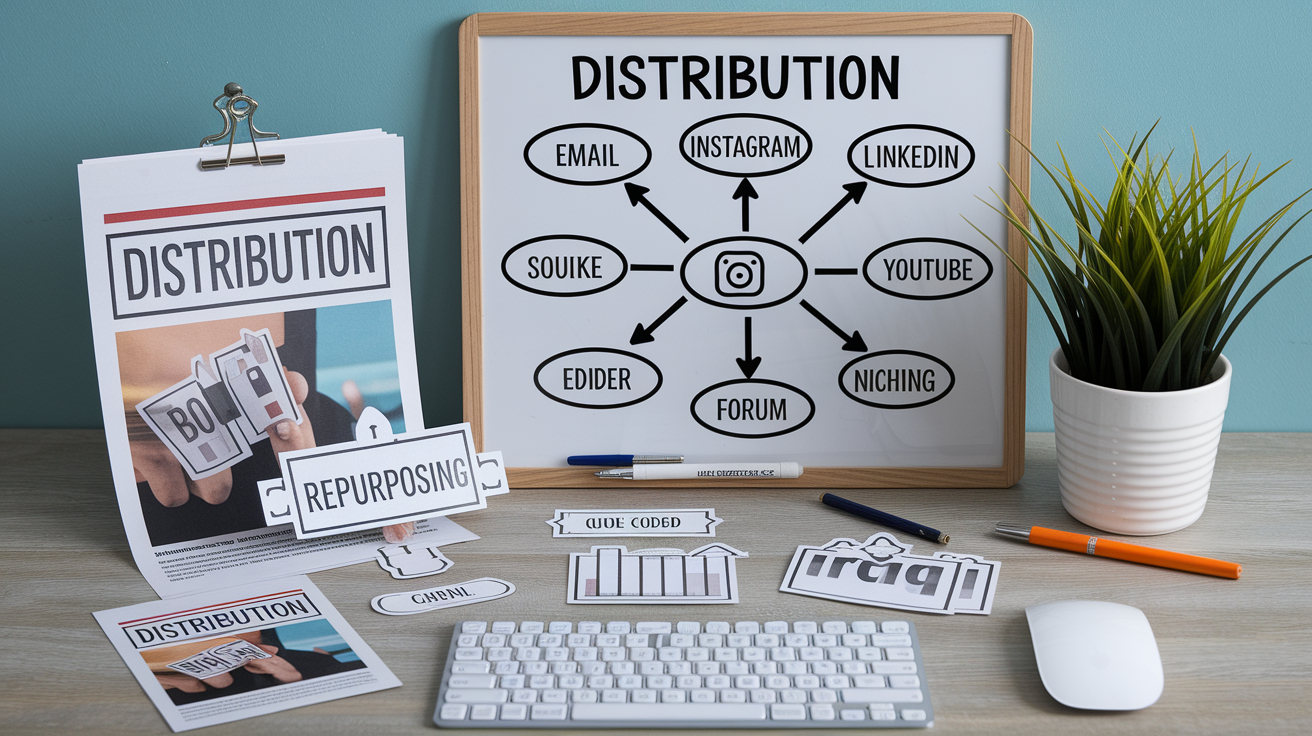
Publishing great content is only half the equation. Distribution determines who sees it and how often. Content distribution channels should align with where your audience already spends time, whether that’s email inboxes, Instagram feeds, LinkedIn, YouTube, or niche forums. Social sharing tactics like adding prominent social media buttons to email newsletters increase cross-channel visits and extend content lifespan. Tagging influencers, industry experts, or sources you quoted in a piece raises the chance they’ll share it with their own followers, multiplying your reach.
Repurposing content formats allows you to maximize the ROI of every piece you create. A single longread blog post can become a carousel post, an infographic, a series of quote graphics, a video script, and multiple email newsletter snippets. Evergreen content (guides, frameworks, foundational how-tos) delivers the highest return on repurposing because it remains relevant over time and can be reshared across platforms without feeling stale. Monitoring which formats and channels drive the most engagement for each topic helps you prioritize where to invest production effort.
Turning Evergreen Assets Into High-Engagement Formats
One proven repurposing pathway starts with a comprehensive blog post or guide. Pull the three to five most actionable takeaways and turn each into a standalone social post with a custom graphic. Create a quote card featuring a surprising statistic or insight from the piece, adding your brand colors and logo for consistency. These bite-sized visuals work well on Instagram, LinkedIn, Pinterest, and Facebook, driving traffic back to the full article while also performing as sharable content on their own. Another pathway involves extracting key data points, steps, or comparisons and designing an infographic that visualizes the information in a scannable format. Infographics perform especially well on Pinterest and LinkedIn, where users seek practical resources they can save or forward to colleagues. A third approach transforms written content into short-form video by scripting a 60 to 90-second summary, filming yourself or using stock footage with text overlays, and posting the video as a Reel, Short, or Story. Add a call to action at the end directing viewers to the full guide, and include a link in your bio or comments. Each format reaches different audience segments and learning preferences, compounding the original content’s impact without requiring entirely new ideas.
Metrics, Analytics, and Data Insights for Measuring Engaging Content

Measuring engagement accurately tells you what’s working, what’s not, and where to focus your next effort. The Content Performance Indicator (CPI) algorithm is one example of a precise engagement score that combines multiple signals (views, shares, comments, time on page, scroll depth) into a single metric that identifies which content to prioritize and when to act. Notification features like “Smartify” can surface alerts when certain content surges, allowing you to amplify high-performers with paid promotion or additional distribution while momentum is building.
Beyond composite scores, individual metrics reveal specific strengths and weaknesses. Engagement rate measurement tracks the percentage of your audience that interacts with a post relative to total reach, showing whether your content resonates or just gets seen. Time on page and scroll depth indicate whether readers are consuming your material or bouncing after the headline. Testing ideas (different headlines, thumbnail images, CTAs, or publish times) provides controlled experiments that isolate what drives better performance. Heatmaps show where users click, hover, or drop off on a page, helping you optimize layout and content flow.
Analytics platforms (Google Analytics, native social media insights, email marketing dashboards) offer raw data, but the real value comes from asking the right questions. Are certain topics or formats consistently outperforming others? Do engagement metrics spike at specific times or after specific types of headlines? Is there a drop-off point in your video content where viewers consistently stop watching? Tracking ROI of content means connecting engagement actions to business outcomes like email signups, product purchases, demo requests, or customer retention. When you can demonstrate that a particular piece of content generated measurable leads or revenue, you build a case for doing more of the same.
| Metric | What It Measures | Why It Matters |
|---|---|---|
| Engagement rate | Percentage of audience that likes, comments, shares, or clicks relative to total reach | Shows whether content resonates and prompts action, not just passive views |
| Time on page / watch time | How long users stay with your content before leaving | Indicates content quality, relevance, and whether you’re delivering on the headline promise |
| Scroll depth / video retention | How far down a page or through a video users progress | Reveals where interest drops off and where to tighten pacing or add stronger hooks |
| Conversion rate | Percentage of engaged users who complete a desired action (signup, purchase, download) | Connects content engagement to business outcomes and ROI |
Final Words
Use audience-first framing, clear headlines, storytelling, visuals, interactivity, and smart pacing to grab attention right away.
Watch data signals like time on page, retention, and comments to see what’s working. Make headlines promise and deliver. Test formats, repurpose strong pieces, and respond to audience input.
Bring these principles together, keep testing, and you’ll steadily create more engaging content that connects and grows. Small improvements add up.
FAQ
Q: What are some engaging content?
A: Engaging content includes clear, audience-first pieces like how-to guides, short videos, stories, quizzes, infographics, and interactive posts that solve a need, prompt emotion, or invite participation.
Q: What are the 5 C’s of content?
A: The 5 C’s of content are clear, concise, compelling, credible, and consistent—each helps your message stay easy to follow, trustworthy, emotionally engaging, and reliably presented across channels.
Q: What are the 4 types of engagement?
A: The 4 types of engagement are reactions (likes), comments, shares (reposts), and actions like clicks or saves—each shows a different level of interest and signals what content resonates.
Q: What is the 5 3 2 rule for social media?
A: The 5 3 2 rule for social media is sharing 5 third-party posts, 3 of your own useful posts, and 2 personal or behind-the-scenes updates to build trust and varied value.