


Think outlines are optional? Skipping them often turns writing into guesswork and wasted time.
A content outline is like a roadmap: it shows where to go, what to include, and what to skip.
Done right, an outline lifts SEO rankings, speeds drafting, makes collaboration easy, and keeps readers engaged.
This post shares clear, step-by-step outline strategies you can use today, from choosing a target keyword to building H2/H3 hierarchies, so your articles rank better, ship faster, and need fewer revisions.
Follow along and write with a plan.
Understanding the Purpose of a Content Outline

A content outline is your pre-writing roadmap. It maps exactly what an article should include before you type a single sentence. You get your title (H1), main sections (H2), subsections (H3 through H6), target keywords with search volume, search intent, article goals, your unique selling proposition, and detailed notes explaining what to cover in each section. No more staring at a blank page wondering what comes next.
The SEO impact is measurable. When you target a keyword like “ramen noodles” with roughly 143,000 monthly searches, your outline makes sure you cover every subtopic competitors rank for. You answer questions from People Also Ask boxes. You include semantically related terms that search engines expect. SERP analysis and competitor metrics (domain rating around 20 for easier variations) guide which keywords to target and which angles will actually rank. One article built from a detailed outline now ranks for over 200 keywords after initially targeting a term with just 1,500 monthly searches. It’s earned 49 linking websites.
Outlines improve clarity by forcing you to organize scattered ideas into logical clusters before you commit words to the page. They ensure flow by revealing gaps and redundancies at the planning stage, when fixes take seconds instead of hours. They make outsourcing scalable, because even an average writer can meet quality standards when handed an outline with clear section instructions, required data points, and example sources.
Key functions:
- Organizes information into a hierarchy that mirrors how readers scan and navigate
- Aligns every heading with SEO requirements, including keyword placement and topical coverage
- Maintains focus by defining word count targets and scope limits for each section
- Improves collaboration by giving editors, subject experts, and writers a shared roadmap
- Speeds drafting by eliminating decision fatigue
Key Elements Found in an Effective Content Outline
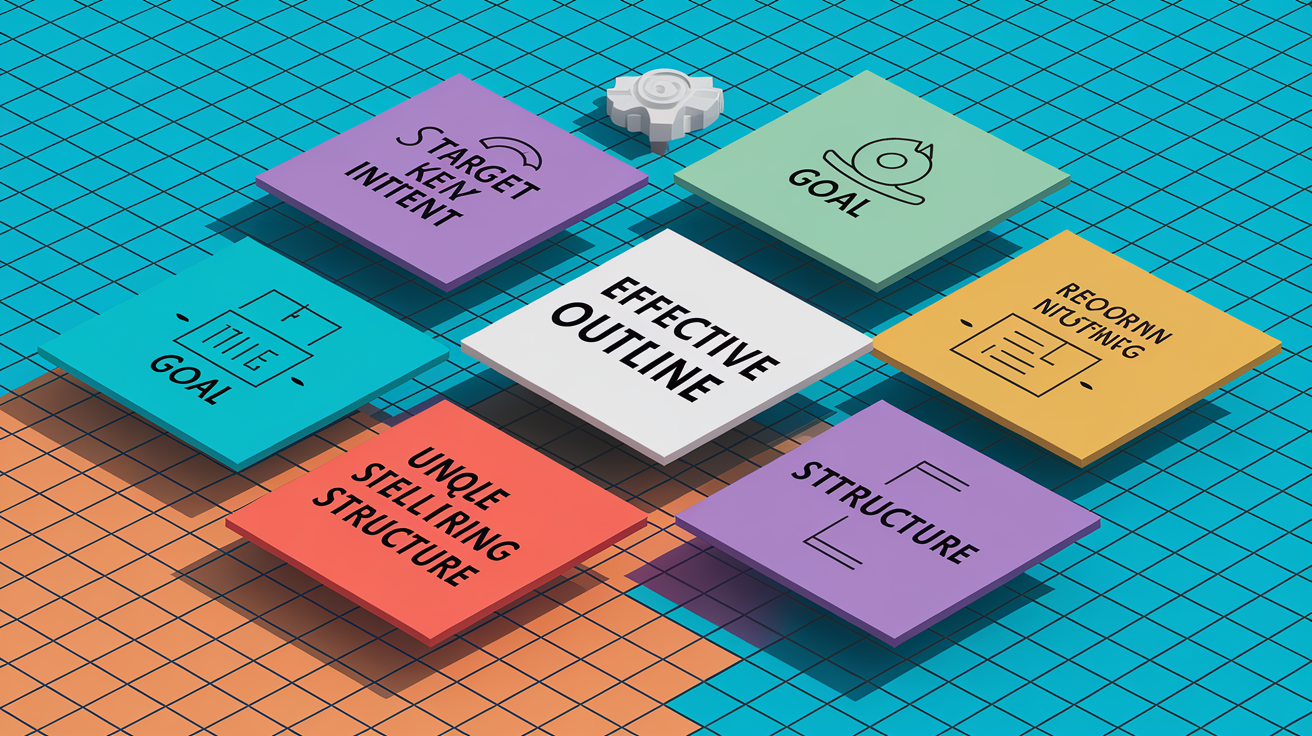
Every strong outline starts with a clear target keyword, its monthly search volume, and the search intent it satisfies: informational, navigational, commercial, or transactional. Next comes your article’s goal. Building brand awareness? Generating backlinks? Growing an email list? Converting readers into customers? The USP and multiple title options sit at the top so you can test which angle resonates before committing to a full draft. Your chosen content angle (from-scratch ramen versus upgrading instant noodles) shapes every heading and example that follows.
Structural elements include a complete H2 and H3 hierarchy, with one to three bullet points under each subheading describing the exact points, examples, statistics, or visuals the writer must include. You also list research sources, quotes, and citations with URLs, plus notes from People Also Ask and related searches to ensure topical completeness. Some outlines add tone guidelines, internal link suggestions, product mentions, and calls to action when the content serves a specific conversion goal.
Six elements found in high-quality outlines:
- Target keyword and search volume – Primary term, monthly search estimate, and any secondary or long-tail variations
- Search intent and content angle – Informational, commercial, navigational, or transactional, plus the specific approach that differentiates your piece
- Article goal and USP – What the content achieves (backlinks, conversions, authority) and what makes it better than competing articles
- Title and headline options – Multiple H1 candidates to test different hooks and keyword placements
- Hierarchical headings with detailed notes – H2s and H3s (sometimes H4 to H6) with bullet point instructions for each section, including required data, examples, and sources
- SERP and competitor insights – Notes on questions to answer, subtopics to cover, recommended text length, and backlink benchmarks from the top 10 results
Different Content Outline Formats and Structures

Hierarchical outlines use a nested structure. H1 flows into H2s, which branch into H3s and down to H6 when needed. They work best for long-form articles, research papers, and any content with complex layers. Bullet point outlines strip away numbering and rely on indentation or dashes to show relationships. They suit short blog posts, early brainstorming sessions, and quick planning where speed matters more than formality. Mind maps and topic card views arrange ideas spatially, helping you cluster related concepts and spot connections that linear formats hide. Ideal for ideation and topic exploration before you commit to a sequence.
Formal systems add explicit notation. Alphanumeric outlines use Roman numerals, capital letters, Arabic numbers, and lowercase letters (I, A, 1, a) to indicate hierarchy. Decimal outlines use numbers and decimals (1.0, 1.1, 1.1.1) for precise nesting. Both formats shine in academic writing, technical documentation, and team environments where multiple contributors need unambiguous section references. Informal formats (bullets, sticky notes, whiteboard sketches) accelerate drafting by reducing overhead, though they can become hard to follow once an outline grows past a few dozen points.
Choose your format based on content length, collaboration needs, and how much detail you want visible at a glance. A 500 word blog post rarely needs more than a bullet list. A 3,000 word guide benefits from numbered H2s and nested H3s with supporting notes. When working solo, pick whatever format keeps you moving. When handing off to a writer or editor, go toward hierarchical structures with clear numbering so instructions stay unambiguous.
| Format | Best For | Notes |
|---|---|---|
| Hierarchical (H1 → H2 → H3 to H6) | Long-form articles, comprehensive guides, research papers | Clear nesting, easy to scan, supports deep subtopics |
| Bullet point | Short posts, quick planning, early brainstorming | Fast to create, less formal, can become cluttered at scale |
| Mind map | Ideation, topic clustering, visual thinkers | Reveals connections, harder to convert directly into linear draft |
| Formal alphanumeric or decimal | Academic writing, technical docs, multi-author projects | Unambiguous references, higher setup cost, rigid structure |
How to Create a Content Outline Step-by-Step
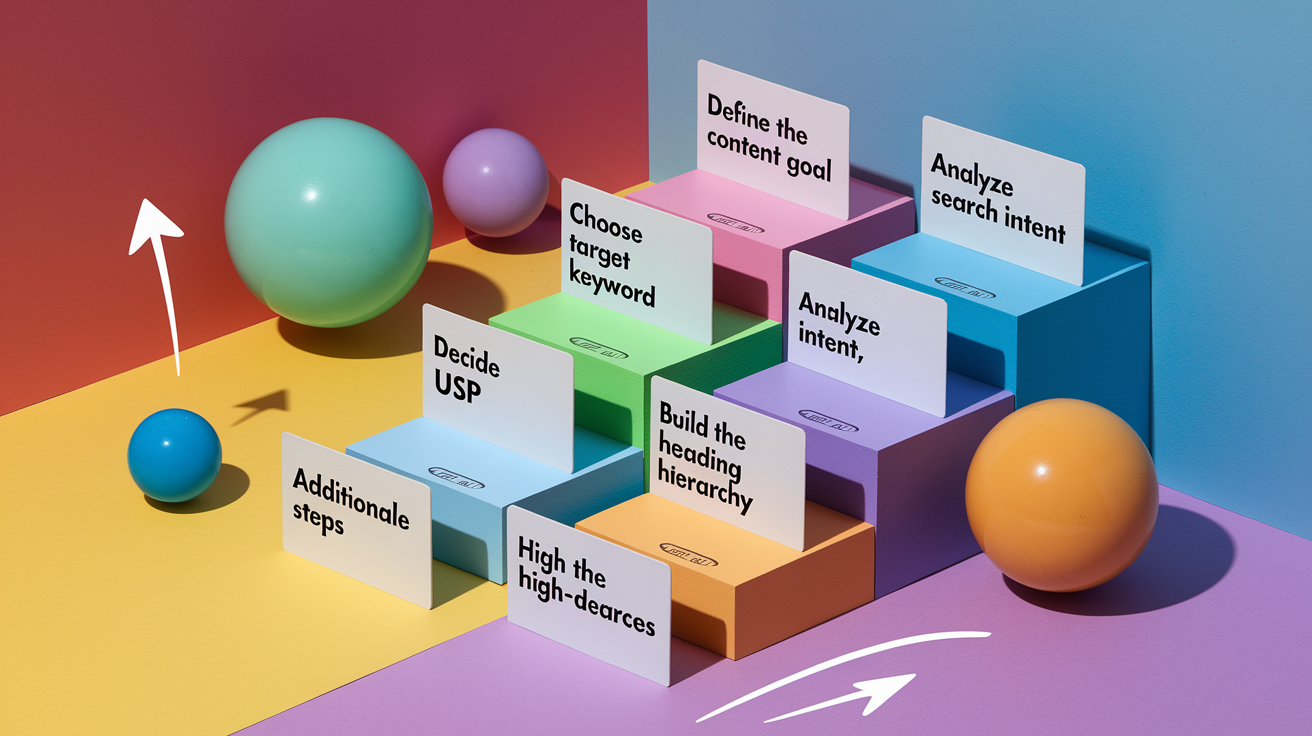
Define the Content Goal
Start by deciding what this article needs to accomplish. Build backlinks? Grow brand awareness? Capture email subscribers? Drive product sales? Establish authority on a topic? Your goal shapes every downstream decision, from keyword selection to tone to the calls to action you embed. An article targeting backlinks will prioritize comprehensive coverage and original data. A conversion focused piece leans into product benefits and comparison tables.
Choose the Target Keyword
Pick a primary keyword that balances monthly search volume with keyword difficulty, using a 0 to 100 scale where 100 means hardest to rank. Filter candidates by search intent and favor terms marked “Easy” or “Very Easy” when your domain authority is modest. Long-tail question keywords often carry lower competition and higher conversion intent. “How to make ramen noodles” at moderate volume may outperform “ramen noodles” at 143,000 searches if the top results are dominated by high-authority sites. Record the keyword, its monthly search estimate, and any secondary or LSI variations you plan to weave into subheadings.
Analyze Search Intent and Article Angle
Look at the top 10 SERP results to decode what users actually want. Step-by-step instructions? Product comparisons? Definitions? Something else? Decide whether your angle will be informational (teaching), commercial (comparing options), navigational (guiding to a resource), or transactional (prompting a purchase). For example, “ramen noodles” might split between a from-scratch recipe and tips for upgrading instant packets. Choose the angle that matches both user intent and your content goal.
Decide on USP and Title Options
Your unique selling proposition is the reason someone should read your article instead of a competitor’s. Maybe you include authentic ingredient sourcing, a faster method, better visuals, or data no one else has published. Write three to five title options that telegraph your USP and incorporate your target keyword naturally. “How to Make Ramen From Scratch (The Easier, Better Way)” and “How to Make Authentic Japanese-Style Ramen Noodles” both highlight speed, authenticity, and the keyword while testing different hooks.
Build the Heading/Subheading Hierarchy
Map your main sections as H2s. What the topic is, step-by-step instructions, variations or alternatives, FAQs, and any supporting topics pulled from People Also Ask or related searches. Under each H2, add H3 subheadings for individual steps, common questions, or subtopics. Below every heading, write one to three bullet points specifying exactly what the writer should cover: required examples, data points, sources, or internal links. The more detailed your bullets, the easier it becomes to hand the outline to another writer and get back a draft that needs minimal revision.
SEO Considerations When Building a Content Outline

SEO starts the moment you select your target keyword, not after the draft is finished. Use keyword research tools to pull monthly search volume, keyword difficulty, and intent classification for every candidate term. Prioritize keywords with manageable difficulty relative to your site’s authority. A domain rating around 20 can compete for “Easy” keywords but will struggle against established sites on high-volume generic terms. Long-tail and question-based keywords often deliver better results because they face less competition and align tightly with specific user questions.
Competitor analysis tells you what topical coverage search engines expect. Review the top 10 results for your target keyword and note their H2 structure, subtopics, content length, and backlink counts. If every top result includes a section on ingredient sourcing or equipment alternatives, your outline needs those sections too. Export notes on semantically related keywords (terms that appear frequently across top results) and weave them into your subheadings and bullet points to signal relevance without keyword stuffing.
Five SEO actions to complete during outlining:
- Choose a primary keyword with balanced search volume and keyword difficulty, plus two or three secondary or LSI keywords to target in subheadings
- Analyze the top 10 SERP results to identify required subtopics, typical content length, and backlink benchmarks
- Scrape People Also Ask boxes and related searches to find question-based H3s and FAQ candidates
- Map LSI and semantically related keywords to specific sections so the writer knows where to incorporate them naturally
- Set a target word count and structural depth (number of H2s and H3s) based on what currently ranks, then aim to match or exceed it where you can add genuine value
Templates and Examples to Model Your Content Outline
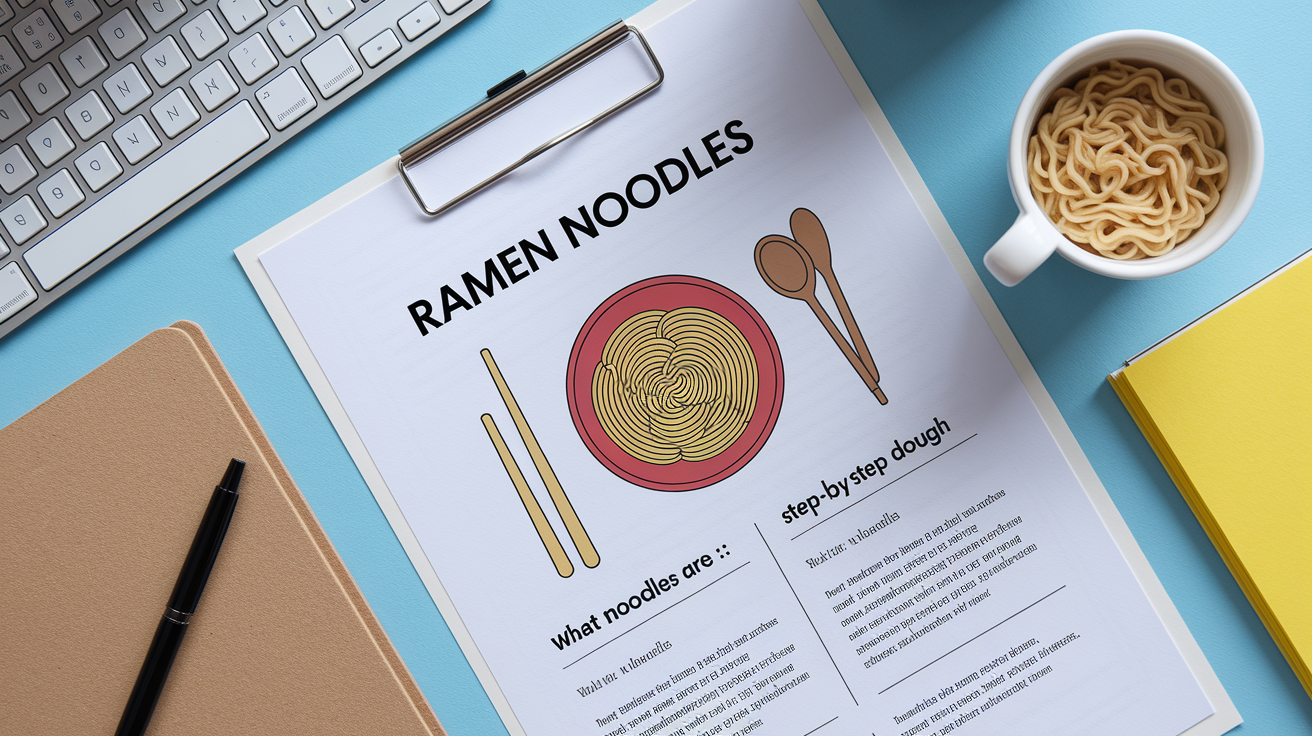
A reusable template typically includes fields for your target keyword and monthly search volume, search intent classification, article goal, USP, three to five title options, and a complete H2/H3 structure with bullet point notes under each heading. Some templates add slots for SERP insights: questions from People Also Ask, common subtopics from competitors, recommended text length, and backlink expectations. The ramen noodles example demonstrates this in action. The primary keyword “ramen noodles” carried approximately 143,000 monthly searches, with an alternative “how to make ramen noodles” offering lower competition against competitors around domain rating 20.
That outline specified two goals: increase brand awareness for hoisin sauce and build backlinks for SEO. The USP centered on authentic, from-scratch ramen that’s easier and uses better ingredients than typical recipes. Headings included “What ramen noodles are,” step-by-step preparation with nested H3s for dough mixing, resting, rolling, and cooking, an ingredient/instruction recipe card, a section on making noodles without a pasta machine, add-in ideas to improve packaged ramen, FAQs pulled from People Also Ask, and sourcing notes for authentic ingredients. Under each H2, one to three bullets told the writer exactly what to include: specific quantities, timing expectations, tool options, and example vegetables or side dishes.
| Template Element | Description |
|---|---|
| Target keyword & volume | Primary term, monthly search estimate, secondary/LSI keywords |
| Search intent & angle | Informational, commercial, navigational, or transactional; chosen approach |
| Article goal & USP | What the content achieves (backlinks, conversions) and what makes it unique |
| H2/H3 structure with notes | Headings, subheadings, and 1 to 3 bullet points per section detailing required content |
Outline Quality Checks and Review Processes

Before handing an outline to a writer or starting your draft, read through the headings aloud to catch awkward transitions, missing logical steps, or redundant sections. Check that your hierarchy makes sense. Each H3 should support its parent H2, and every H2 should advance your article’s central idea and goal. Verify that you’ve included all subtopics competitors cover, plus at least one or two angles they missed, so your piece offers something new rather than repackaging existing content.
Seven point outline quality checklist:
- Does the target keyword appear naturally in the title and at least one H2?
- Have you mapped all major subtopics found in the top 10 SERP results?
- Does each H2 and H3 include one to three bullet points specifying what to write?
- Are sources, data points, and example URLs listed under the relevant headings?
- Is the outline’s structure aligned with your article goal and chosen search intent?
- Have you identified and avoided redundant sections or overlapping subheadings?
- Does the flow follow a logical sequence (chronological, problem-solution, cause-effect, or general-to-specific)?
Collaborative and Team-Based Content Outlining

Outlines turn content production into a repeatable system that scales beyond solo work. When you hand a detailed outline to a writer, even someone with average skills can produce a strong draft because every section comes with explicit instructions: what points to make, which data to cite, where to link, and what tone to use. Teams often maintain a library of approved templates for common content types (how-to guides, product comparisons, listicles, case studies) so new contributors spend less time guessing structure and more time researching and writing.
Shared outlines also align stakeholders before drafting starts. Marketing can confirm the article supports campaign goals. SEO can verify keyword targeting and topical coverage. Subject matter experts can flag missing technical details. Editors can spot structural problems while fixes are still fast. Version history in collaborative tools lets you track who added which sections, making it easy to loop in contributors at the right moment and avoid duplicate work.
Four collaboration benefits of detailed outlines:
- Enable consistent quality across multiple writers by standardizing structure, depth, and required elements
- Reduce revision cycles because stakeholders approve the roadmap before anyone invests hours in a full draft
- Speed onboarding for new team members, who can study past outlines to learn your content standards and SEO approach
- Improve content velocity by letting writers, editors, and SEO specialists work in parallel (research, outline, and draft handoffs happen faster when everyone knows the plan)
Tools and Resources for Building a Content Outline

Keyword research tools pull search volume, keyword difficulty, and intent classification for thousands of candidate terms in seconds, letting you filter by “Easy” difficulty or toggle to a questions view to find long-tail queries. Topic research platforms generate mind maps or topic cards that cluster related subtopics, revealing content gaps and adjacent angles you might otherwise miss. Competitive analysis tools scrape the top 10 SERP results and export a report listing semantically related words, recommended text length, average backlink counts, and on-page SEO tips, which you can attach to your outline as a reference document for the writer.
Some platforms combine all three functions (keyword discovery, topic clustering, and SERP analysis) in a single workflow, letting you move from a seed keyword to a complete outline without switching tools. Export options typically include DOC, PDF, or spreadsheet formats, making it easy to share outlines with collaborators or store them in a content library. Even simple tools like shared documents with comment threads, version history, and heading navigation can support effective outlining when paired with manual SERP research and a reusable template.
Four tool categories for outline building:
- Keyword discovery and filtering – Pull search volume, difficulty scores, and intent data; filter by questions, volume thresholds, and competition level
- Topic research and clustering – Generate mind maps, topic cards, or related question lists to identify subtopics and content angles
- Competitive SERP analysis – Analyze top ranking pages for keyword usage, heading structure, content length, and backlink profiles; export recommendations as attachments
- Collaboration and version control – Shared documents, project management boards, or content calendars that let teams draft, comment on, and approve outlines before writing begins
Final Words
You can now pull the five-step method, format choices, SEO checks, quality-review steps, and collaboration tips into a workable plan.
This article showed what a content outline contains, the key elements and formats, a hands-on creation workflow, SEO considerations, templates to model, review checkpoints, team processes, and useful tools.
Use the templates and checklist to draft your first content outline, test it against search intent and QA, and tweak as you go. Small steps forward. You’ll make stronger, more consistent content.
FAQ
Q: What is a content outline example?
A: A content outline example is a structured roadmap that lists H2/H3 headings, target keywords, search intent, article goals, angle, USP, and short bullet notes to guide writing and SEO.
Q: What are the three types of outlines?
A: The three types of outlines are hierarchical (detailed H1>H2>H3), bullet-point (simple lists), and mind maps (visual idea web), and you choose based on article length and planning stage.
Q: What are the 4 main components of an outline?
A: The four main components of an outline are headings (H2/H3), target keyword and search intent, article goal/USP, and detailed bullet notes or data to cover in each section.
Q: What is the difference between content brief and content outline?
A: The difference between a content brief and a content outline is that a brief summarizes goals, audience, and high-level instructions, while an outline is a detailed, section-by-section roadmap with headings, keywords, and bullet notes.